
The Chehni Kothi trek starts as a short, steep walk above Banjar, past apple orchards and a temple guarding the valley, and ends at a tower that’s stood for three and a half centuries without a single nail holding it together.
That’s Chehni Kothi. It doesn’t get the crowds Jalori Pass does. Most people who make it here came for Jibhi or the pass and heard about this on the way, which is honestly the right way to find it.
If you’re planning the Chehni Kothi trek as a side trip from Jibhi or Banjar, here’s everything worth knowing before you go.
Quick facts
| Location | Chehni village, near Banjar, Kullu district, Himachal Pradesh |
| Age | Roughly 350 years, built in the 17th century |
| Style | Kath Kuni, stone and wood, no nails or cement |
| Original height | 12 storeys |
| Current height | Reduced after the 1905 Kangra earthquake destroyed the top floors |
| Distance from Banjar | ~7 km |
| Trek time | 30-45 minutes uphill from the roadhead |
| Entry inside the tower | Not permitted for outsiders, local custom |
| Best paired with | Jibhi, Tirthan Valley, Jalori Pass |
A short, steep walk above Banjar, past apple orchards and a temple guarding the valley, ends at a tower that’s stood for three and a half centuries without a single nail holding it together.
That’s Chehni Kothi. It doesn’t get the crowds Jalori Pass does. Most people who make it here came for Jibhi or the pass and heard about this on the way, which is honestly the right way to find it.
Table of Contents
What is Chehni Kothi
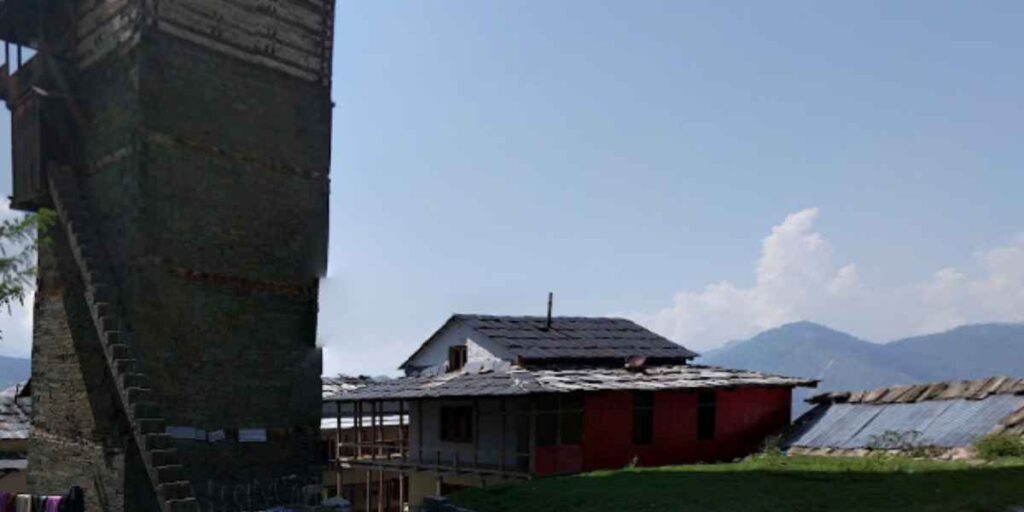
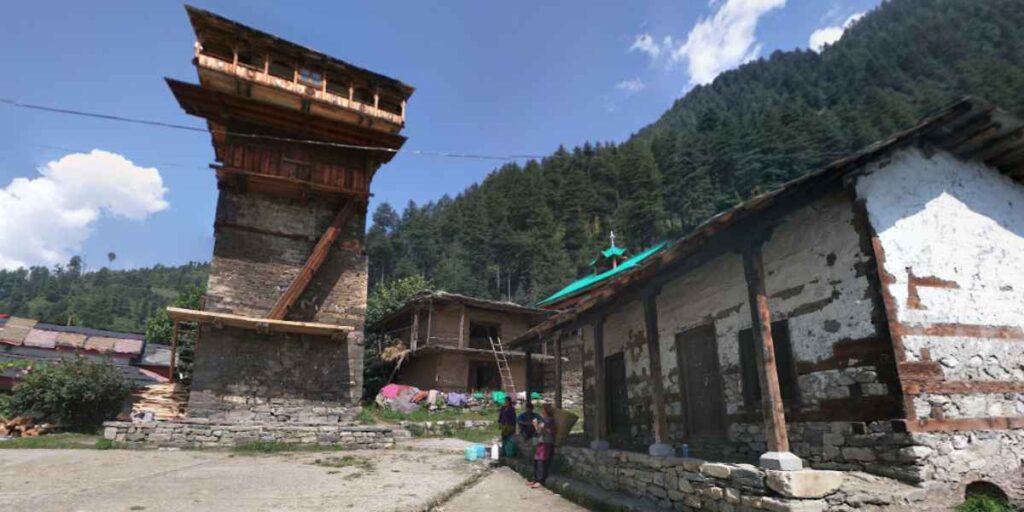
It’s a Kath Kuni tower with alternating layers of stone and timber, built without cement or metal fastenings of any kind. The technique is centuries old and specific to this part of the Himalayas, designed to flex rather than crack during earthquakes.
Sources disagree on the details. Some accounts put its age at 1,500 years and describe it as a temple from the start. The more consistently sourced version, including Wikipedia’s, puts it at around 350 years old, built in the 17th century under a local ruler named Dhadhu, originally as a fortified residence rather than a temple. It stood 12 storeys tall until the 1905 Kangra earthquake tore off the top two floors, which is why what you see today is shorter than the tower’s original height.
We’re going with the more conservative, better-sourced account here. If you’re writing about Chehni Kothi elsewhere and see wildly different numbers, that’s why; the local lore and the documented history don’t fully agree, and neither does the tourism content built on top of both.
Chehni Kothi trek: what the walk is actually like
The trek starts near the road between Banjar and Jibhi, at a signposted turn for Chehni village. From the roadhead, it’s about 30-45 minutes on foot, uphill the whole way, through a mix of stone paths, packed mud, and some loose gravel sections that get slippery after rain.
You’ll pass the Shringa Rishi Temple partway up, dedicated to the deity locals consider the protector of the Banjar Valley. It’s worth a few minutes even if the tower is your main goal.
The path continues through the small village itself, with stone-and-wood houses, apple orchards, and people going about an ordinary day that doesn’t revolve around the handful of travelers passing through. Then the tower comes into view, rising well above the rooftops around it.
It’s not a hard trek by Himalayan standards. Moderate fitness gets you there fine. But it is a real uphill walk, not a stroll, budget closer to an hour if you’re stopping for photos or catching your breath.
Before you climb: the one rule that matters
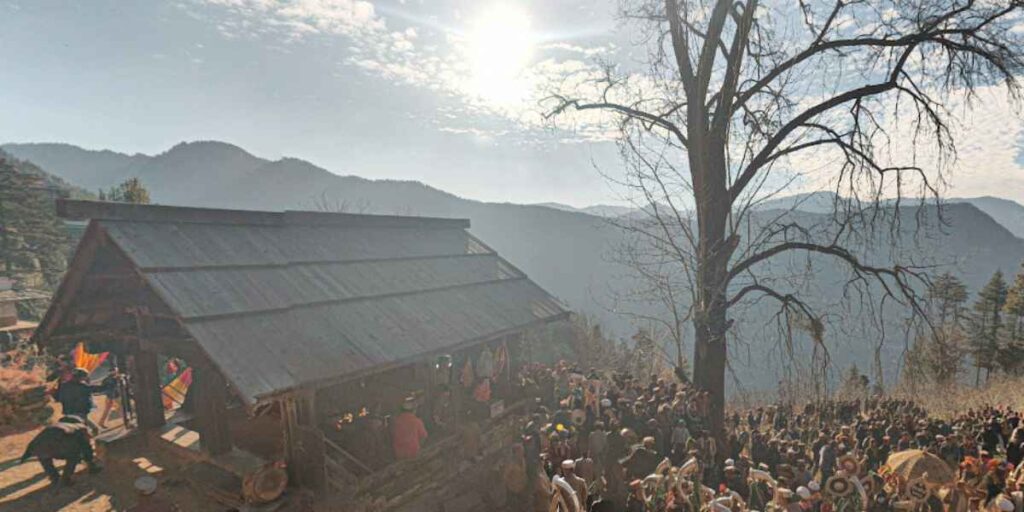
You can’t go inside. Entry to the tower itself is restricted to locals by custom, not by a locked gate or an official sign necessarily, but it’s a firm local expectation. Multiple trekkers have documented being politely but clearly turned away when asking.
Don’t push it. Ask if you’re unsure, and accept the answer if it’s no. The tower’s survival for this long has something to do with exactly this kind of respect from both locals and visitors.
How to reach Chehni Kothi
By road to the base: From Banjar, it’s roughly 7 km to the roadhead near Chehni village, about 20-25 minutes by taxi or your own vehicle. If you’re coming from Jibhi, the turn is a few kilometers before you’d otherwise reach Jibhi itself, so it’s an easy stop on the way in or out.
From Delhi or Chandigarh: Same route as reaching Shoja or Jalori Pass, Delhi to Chandigarh to Mandi to Aut to Banjar. From Banjar, the short drive plus the uphill walk gets you there.
By air: Bhuntar Airport, the same one serving the rest of this region, roughly 55-60 km away.
By train: No direct line, same situation as everywhere else in this cluster. Chandigarh is the practical station for onward connections.
Google Map Direct Link: Click Here
How far is it from places you might already be staying
| From | Distance |
|---|---|
| Banjar | ~7 km |
| Jibhi | ~5-6 km |
| Shoja | ~15 km |
| Jalori Pass | ~18-20 km |
| Kullu | ~65 km |
| Manali | ~85-90 km |
Distances to Jibhi, Shoja, and Jalori Pass are estimated from Banjar-area road networks and haven’t been independently cross-verified across multiple sources the way the Banjar distance has.
Best time to visit
The Chehni Kothi trek is doable most of the year, but avoid attempting it during heavy monsoon or snow.
March through June and September through November, same seasonal logic as the rest of this region. The trail gets slick in monsoon (July-August), and heavy winter snow (December-February) can make the uphill stretch genuinely difficult rather than just uncomfortable.
Where to stay
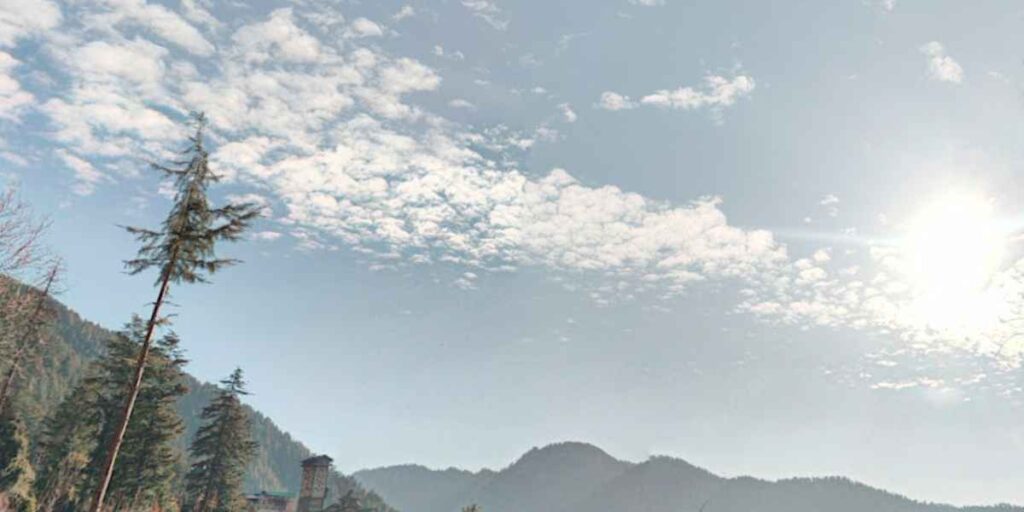
There’s no lodging in Chehni village itself. Base yourself in Jibhi or Banjar, both close enough to make this a half-day add-on to a longer stay, not a destination requiring its own overnight.
What to bring
Pack light for the Chehni Kothi trek; you won’t need more than a day bag.
- Good grip shoes, the trail has loose gravel sections
- Water, there’s nothing to buy once you’re past Banjar
- A camera with a wide lens if you have one, the tower’s height is hard to capture otherwise
- Modest clothing, out of respect for the working village and temple you’re walking through, not a tourist set piece
FAQs for the Chehni Kothi trek
A few quick answers before you set out on the Chehni Kothi trek.
What is Chehni Kothi?
Chehni Kothi is an ancient Kath-Kuni tower in Chehni village near Banjar, Himachal Pradesh, built from stone and wood without any nails or cement and roughly 350 years old.
How do I reach Chehni Kothi?
Drive to Banjar, then continue about 7 km to the roadhead near Chehni village, followed by a 30-45 minute uphill walk to the tower.
Can you go inside Chehni Kothi?
No. Entry to the tower is restricted to locals by custom. Visitors can view and photograph it from outside.
How difficult is the Chehni Kothi trek?
Moderate. It’s a real uphill walk on stone paths and some loose gravel, roughly 30-45 minutes each way, manageable for most fitness levels but not a flat stroll.
How far is Chehni Kothi from Jibhi?
Approximately 5-6 km, making it an easy add-on if you’re already staying in Jibhi.